uliza digital
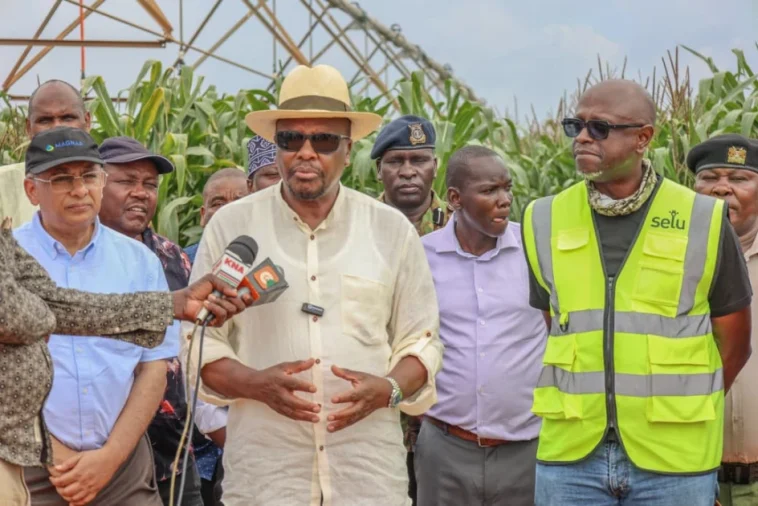
Kenya is turning to large-scale, irrigation-based farming. Recurrent droughts and rising food imports are straining the economy. CS Mutahi Kagwe says rain-fed farming can no longer feed a growing population under unpredictable climate conditions.
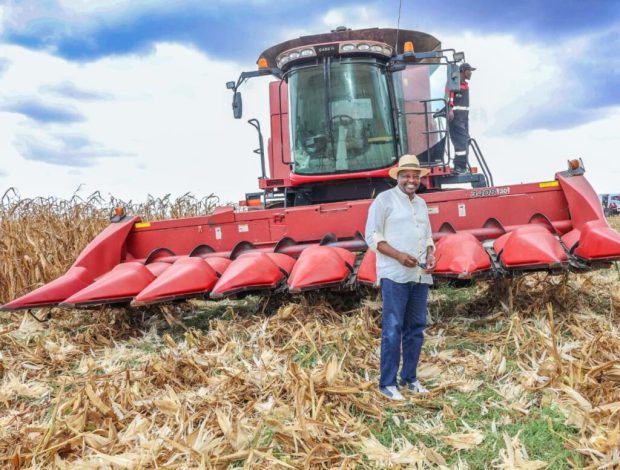
CS Kagwe said the country must adopt scientific, technology-driven, and digital farming. This will raise productivity per acre. He highlighted the Arid and Semi-Arid Lands, which cover over 80 per cent of Kenya. These regions are key to the country’s food future if irrigation and mechanisation are fully implemented.
At the centre of the plan is the 1.8 million-acre Galana-Kulalu Food Security Project. The land is strictly for large-scale, mechanised, irrigated farming. Kagwe warned that subdividing the land would undermine mechanisation. Large-scale irrigation, he said, is the only way to stabilise food supply, reduce imports, and build resilience against drought.
Kenya currently imports 92 per cent of its wheat, more than 80 per cent of rice, and large amounts of sugar. Droughts have repeatedly disrupted domestic production. Under the Land Commercialization Initiative, the government is inviting local and international investors. Land allocation will be transparent, competitive, and free from favouritism.
Kagwe also highlighted the project’s economic benefits. Irrigation will boost demand for fertilisers, pipes, transport, and agro-processing. The government is working to reduce production costs, including water delivery, electricity, and irrigation pipes. He urged local manufacturers to scale up. Surrounding communities were encouraged to invest in housing, retail, and services to support workers.
CS Kagwe showcased private-sector leadership at the Nyumba Group. He commissioned an 800-acre earth dam holding six billion litres for year-round irrigation. The Nyumba model, with Sh6.4 billion invested in 300,000 acres, is a benchmark for technology-driven farming. Kagwe also visited seed producer Selu to stress the importance of quality seeds, water infrastructure and community inclusion in transforming Kenya’s agriculture and reducing import dependence.
Share this:

Discover more from ULIZA LINKS NEWS
Subscribe to get the latest posts sent to your email.