uliza digital
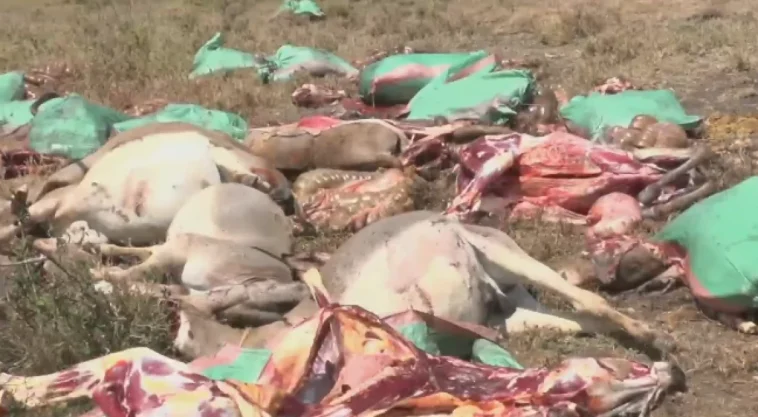
Police in Kajiado County are hunting more than 20 suspects after locals caught them slaughtering 34 donkeys in Ereteti, Kajiado West. The suspects fled when confronted, leaving behind carcasses scattered along the riverbank.
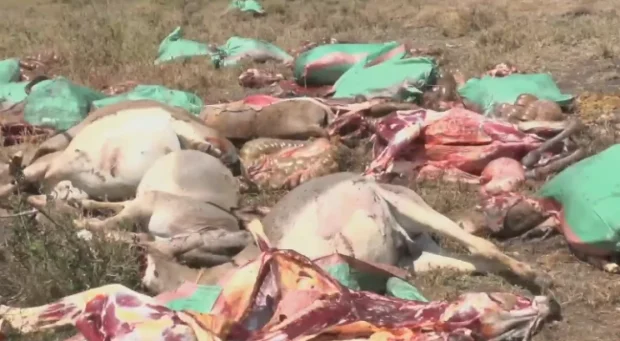
Two vehicles and a motorcycle, believed to be used to transport the meat to Nairobi, were seized at the scene. Citizen Digital reporters who visited the area found donkey carcasses strewn across the village. Some were already skinned and packed into bags, while others were awaiting processing.
Residents said the discovery shocked the community. “When we raised the alarm, they ran,” one local said. “It’s devastating to see animals killed like this.”
Gideon Ndapaya, a community member, said the number of donkeys slaughtered could be higher than what police recovered. Area Chief Edward Mopel noted that such incidents have been happening for a while. “Criminals often bury carcasses to hide the smell. This has been going on for some time,” he explained.
Animal rights activists also condemned the act. Sylvester Wakhu, who leads a local animal welfare group, described the illegal donkey killings as alarming and increasingly common in Kajiado West and Central Kajiado. “This is cruel and illegal. Donkeys are important to the community and the economy. Such acts must stop,” he said.
Kajiado West Public Health Officer Jeremiah Lalaito called on residents to stay alert. He urged anyone who witnesses similar acts to report them immediately. “Timely reporting allows us to take action and prevent further loss,” Lalaito said.
Police are investigating and reviewing CCTV footage in nearby areas to track the suspects. They have warned that anyone caught engaging in illegal donkey slaughtering will face strict legal action.
The incident raises concerns about the growing trend of donkey meat trafficking to urban centers. Donkeys, often used for transport and farming, are now at risk from organized criminal gangs.
As authorities intensify patrols, residents are being urged to protect the animals and remain vigilant. Community cooperation, activists say, is key to ending the illegal trade.
The Kajiado case highlights the need for stronger enforcement and community awareness to stop animal cruelty and safeguard livelihoods.
Share this:

Discover more from ULIZA LINKS NEWS
Subscribe to get the latest posts sent to your email.