uliza digital
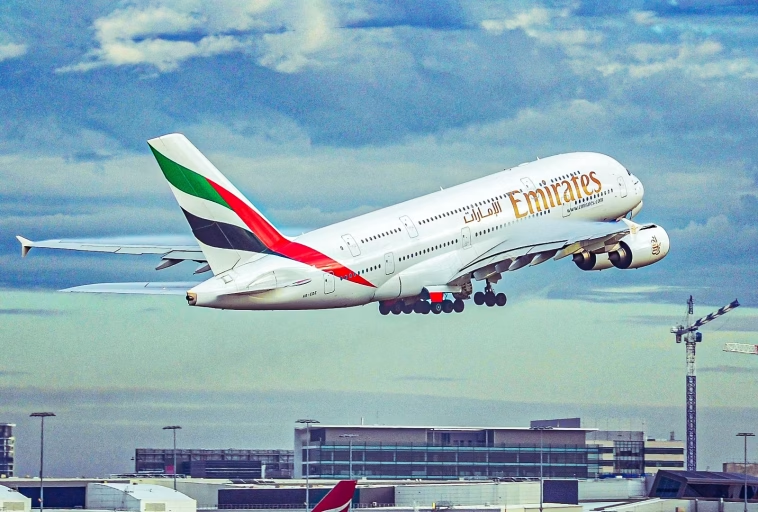
Aviation across the Middle East has been thrown into turmoil following the escalation of hostilities involving the United States, Israel and Iran. Thousands of passengers remain stranded. Airlines are scrambling. Governments are reviewing emergency plans.
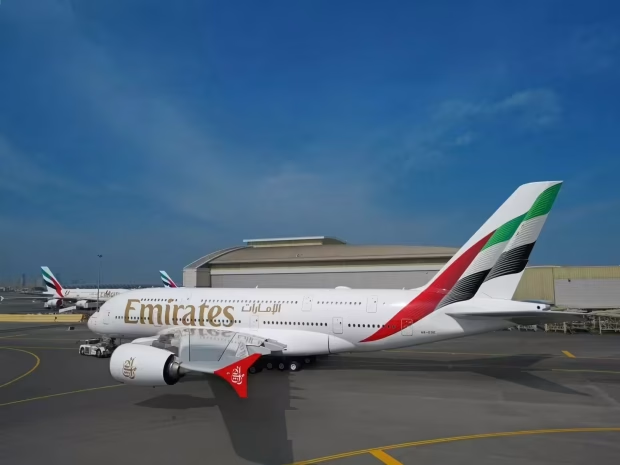
Amid the uncertainty, the United Arab Emirates has cautiously restarted a handful of flights. Officials confirmed that only a “small number” of departures have been cleared from Dubai International Airport and Dubai World Central. The reopening is limited and tightly controlled. Authorities have warned travellers not to proceed to airports unless their airline has directly issued a confirmed departure time.
Dubai-based carrier Emirates announced it would restart a “limited” schedule from Monday evening. The airline said passengers with earlier bookings would receive priority as services gradually resume. In contrast, Etihad Airways has extended its suspension of commercial passenger operations until Wednesday. The airline indicated that certain “repositioning, cargo and repatriation flights” may still operate, but only after safety and operational approvals.
The disruption stems from intensifying military exchanges in the region. Following US-Israeli strikes on Iran and retaliatory action by Tehran, multiple countries shut their airspace. Iraq, Jordan, Qatar and Bahrain were among those that halted civilian flights. The ripple effect has been severe, paralysing one of the world’s busiest air corridors.
Data from aviation analytics firm Cirium shows that more than 11,000 flights have been cancelled since the crisis began on Saturday. The cancellations have affected both regional and international routes, creating logistical challenges for airlines and diplomatic pressure on governments to assist stranded nationals.
Airlines now face difficult decisions. Safety remains the top priority. Yet the financial and operational costs of prolonged closures are mounting. For travellers, flexibility is critical. Schedules may shift with little warning. Until tensions ease, the Middle East’s skies will remain unpredictable.
Share this:

Discover more from ULIZA LINKS NEWS
Subscribe to get the latest posts sent to your email.