uliza digital

Kiharu MP Ndindi Nyoro and Embakasi East MP Babu Owino have questioned President William Ruto’s push to model Kenya’s economic transformation on Singapore. They argue the comparison ignores Kenya’s size, structure, and economic realities. According to the two lawmakers, copying Singapore risks misguided policy choices.
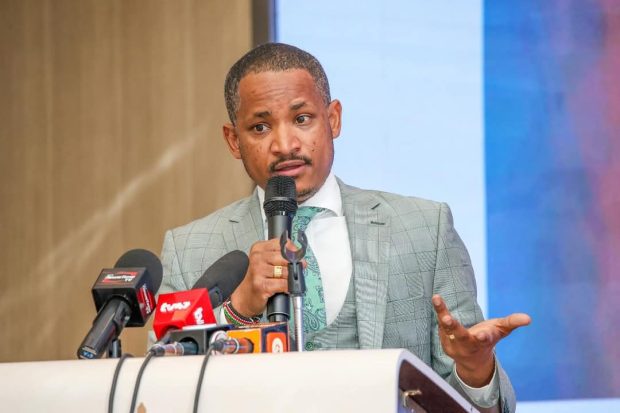
Speaking on JKLive on Wednesday, Nyoro urged leaders to use realistic benchmarks. He said economic comparisons only work when countries share similar conditions. Without that, policies lose focus. He used a simple analogy to drive the point home. “A banana farmer,” he said, “cannot measure success using oranges.”
Nyoro pointed to income disparities. Singapore’s GDP per capita stands at about USD 90,000. Kenya’s is roughly USD 3,000. “That gap,” he said, “reflects two very different economies. As a result, what works in Singapore may not work in Kenya.”
He also highlighted Singapore’s heavy State involvement. In its early years, the government played a central economic role. Today, State-linked firms still dominate key sectors. Nyoro said this approach contrasts sharply with Kenya’s current push to privatise State-owned enterprises.
Instead, Nyoro argued that Kenya resembles South Korea more closely. Both countries have populations of about 50 million. Singapore, by contrast, has just over six million people. He added that Asian tiger economies grew by nurturing private enterprise, attracting foreign investment, and starting with labour-intensive industries.
Nyoro warned against confusing remittances with foreign direct investment. “Remittances drive consumption,” he said. FDI drives production. He also noted that successful economies avoided patronage and kept politics out of economic incentives.
Babu Owino echoed the criticism. He focused on geography and demographics. Singapore covers about 736 square kilometres. Kenya spans roughly 580,000 square kilometres. “Kenya,” he said, “is nearly 800 times larger.”
Owino questioned how Kenya could realistically copy Singapore’s model. He argued that Kenya already has a local blueprint. He cited Vision 2030, launched under former President Mwai Kibaki. The plan focused on growth, social development and governance reforms.
He added that neglecting security, infrastructure and land reforms has slowed progress. “Without meeting basic needs,” Babu Owino said, “comparisons with Singapore remain premature.”
The remarks have reignited debate over Kenya’s development path. Critics now urge the government to fix fundamentals before chasing foreign models.
Share this:

Discover more from ULIZA LINKS NEWS
Subscribe to get the latest posts sent to your email.