 Link Press
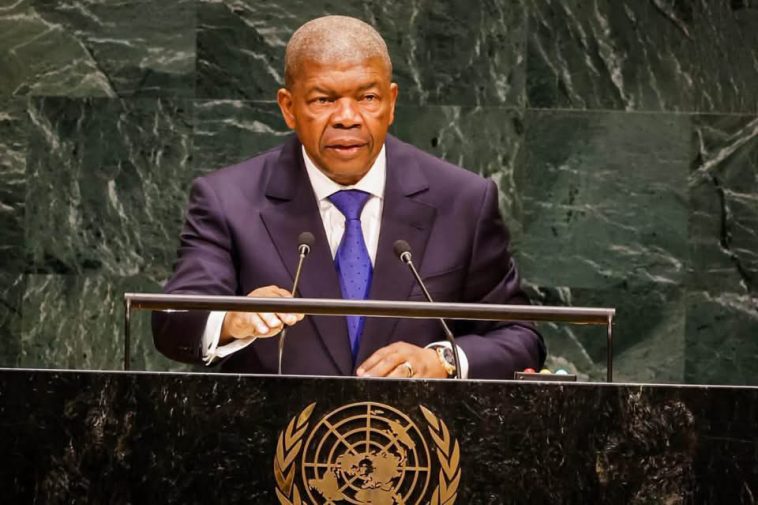
President João Lourenço used his address to the 81st United Nations General Assembly in New York on 22 September 2026 to put artificial intelligence and Angola digital transformation at the heart of Africa’s development agenda — linking technology to public services, productivity, inclusion and the continent’s right to help write the global rules for AI.
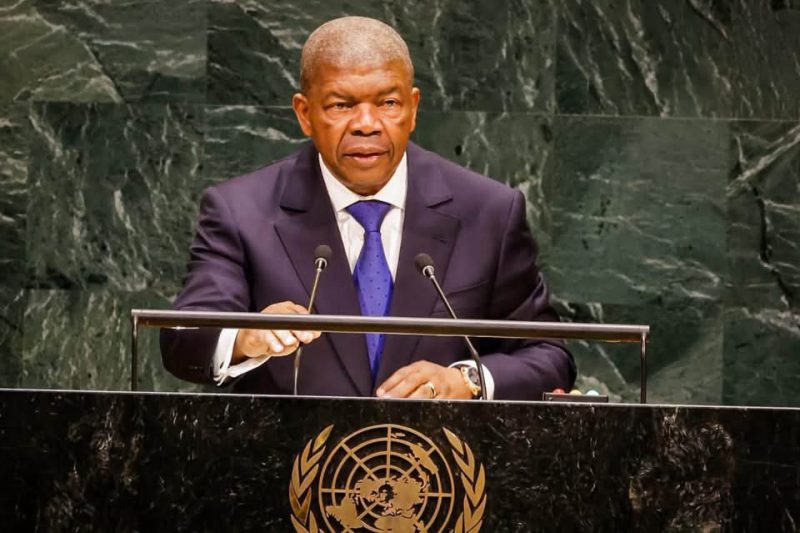
“The voice of Africans must be heard in all circumstances, at every moment, in strategic decision-making on peace, global security, development finance, climate — and the global governance of Artificial Intelligence.”
President João Lourenço, UN General Assembly, 22 September 2026 (translated from Portuguese)
For Angola, the speech lands as the government moves from scattered digital projects towards an integrated architecture for the entire state. That shift already shows up in the numbers: in the World Bank’s 2025 GovTech Maturity Index, Angola climbed from Group C to Group B with a score of 0.593 — just above the global average of 0.589.
The ranking is significant, but the bigger story sits behind it: a programme of institutional reform and public investment that is changing how the Angolan state manages information, delivers services and deals with citizens and businesses.
From paperwork to a digital state: how Angola digital transformation began
The digital agenda is part of the wider state-reform programme led by President Lourenço. In June 2024, the Council of Ministers, chaired by the President, approved the 2027 Digital Transition Agenda for Public Administration, identifying 214 priority projects across government. Its aim: accelerate the digitisation of public services, simplify procedures and cut the administrative burden on citizens and companies.
The approach is not simply to put existing paperwork online. A central objective is to make government systems talk to each other. A planned interoperability platform will let public institutions exchange information securely, so citizens stop re-submitting data the state already holds.
That distinction matters. Digitising a paper-based bureaucracy makes an inefficient system faster. Interoperability can change the structure of the bureaucracy itself.
The $450 million backbone underneath government
In June 2026, Angola formalised a $150 million Public Digital Infrastructure Project to strengthen interoperability, digital identity, electronic signatures and the security of government digital services. With a planned 12-month implementation window, it is meant to be the technological backbone connecting the state’s information systems.
It sits inside a wider digital transformation investment programme worth about $450 million — including $300 million in World Bank financing — with the principal systems targeted for completion by 2027.
The significance goes beyond the hardware. Angola is laying the basic layers of national digital public infrastructure: the systems through which identity, data, authentication, government services and secure transactions can work across institutional boundaries.
Digital identity becomes the gateway to government
Digital identity is one of the most consequential pieces of the architecture. A working digital ID lets citizens and businesses sign in across many public services instead of juggling separate credentials and records at every institution. Paired with electronic signatures, it makes it possible to complete administrative procedures digitally from start to finish.
That is the difference between putting a government form on a website and building a genuinely digital government. The groundwork goes back to 2022, when the government approved a roadmap that included a Single Window for Non-Presential Public Services — one digital front door to many government services.
Cybersecurity becomes national infrastructure
As more services, citizen records and administrative processes move online, cybersecurity stops being a back-office technical function and becomes core state infrastructure. The new public digital infrastructure project explicitly covers the security, continuity and reliability of e-government services alongside interoperability and digital identity.
That matters even more as Angola moves towards AI, because AI systems depend on large datasets, secure computing and reliable networks.
AI moves from policy talk to implementation
This is where the UN speech meets Angola’s domestic reform agenda most directly. At the podium, Lourenço made the case that AI is a development tool, not a luxury:
“Today, peoples and nations face an opportunity to make a qualitative leap in their general living conditions, using fair mechanisms of development support and the tools that Artificial Intelligence provides to improve education, health, agriculture, public services, scientific research and economic productivity.”
President João Lourenço (translated from Portuguese)
He tied that directly to the UN’s Global Digital Compact, saying it “opens new prospects for cooperation to reduce the digital divide, expand public digital infrastructure, promote training and innovation, strengthen cybersecurity and build a more inclusive, safe and human-centred governance of Artificial Intelligence.”
For Angola, the question is no longer whether to adopt AI, but whether the country can build the institutional, technological and human-capital foundations to deploy it at scale. The sequence is becoming clear: digital infrastructure first, interoperability and identity next, cybersecurity and legal frameworks alongside them — and AI applications on top. It is a path other African states are watching closely, including Kenya, which leads East Africa in AI adoption.
What Angola digital transformation means for investors and citizens
Angola’s GovTech jump is best read as a signal of wider change rather than a league-table win. The World Bank’s index measures core government systems and shared infrastructure, online public services, digital citizen engagement, and enablers such as governance, regulation, skills, data management and security.
The next test is whether that progress turns into measurable economic results. A more integrated digital state can cut the time and cost of registering a business, getting licences, complying with tax rules and dealing with government agencies. For investors, the quality of government digital infrastructure is now part of the business environment — the same logic that has driven digital growth in African banking. For citizens, it decides whether a service means a queue and a stack of photocopies, or a few taps on a phone.
Commitments already on the table
- 8.6 billion kwanzas authorised in January 2026 for Microsoft licences across the Public Administration, linked to a partnership that includes training for public servants and wider digital platforms.
- Project for Digital Acceleration of Angola, backed by proposed World Bank financing of $300 million, targeting digital inclusion, better public services and a digital entrepreneurship ecosystem.
- $150 million Public Digital Infrastructure Project for interoperability, digital ID, e-signatures and cybersecurity, with core systems due by 2027.
Together they point to a broader shift: digitalisation treated as the infrastructure of government and economic development, not a collection of standalone IT projects.
The next test is execution
Lourenço’s message in New York was that Africa should not merely consume technologies built elsewhere, but help define the rules that govern them. At home, the credibility of that ambition will rest on delivery. Group B status does not mean the job is done — the government’s own programme acknowledges that major systems still need to be integrated, with the principal components being rolled out towards 2027.
Angola is trying to join digital identity, interoperability, e-signatures, cybersecurity, public digital infrastructure and AI into one architecture for the state. If it works, the reform could change far more than how citizens access services: it could reshape how companies deal with the state, how public data is used, how investment is processed, and where Angola stands in Africa’s emerging digital economy.
The message from New York and the work at home are the same story: for Lourenço’s government, Angola digital transformation is no longer just an IT reform — it is part of restructuring the Angolan state and its place in the African economy.
Sources: CIPRA — President’s speech to the 81st UN General Assembly | Governo de Angola — GovTech Group C to B | Governo de Angola — Digital Transition Agenda 2027 | Governo de Angola — Public Digital Infrastructure Project | Governo de Angola — Digital transition roadmap | Governo de Angola — Microsoft licences | Governo de Angola — Digital Acceleration Project
Share this:

Discover more from ULIZA LINKS NEWS
Subscribe to get the latest posts sent to your email.




You must be logged in to post a comment.